Move from a baseline footprint into a staged pathway with realistic reductions, residual emissions and a clearer view of what still needs to be addressed.
Open calculator →Model baseline emissions, reduction levers, target year and residual requirements without paying. Create a free account to save the pathway, then unlock a professional PDF report when needed.
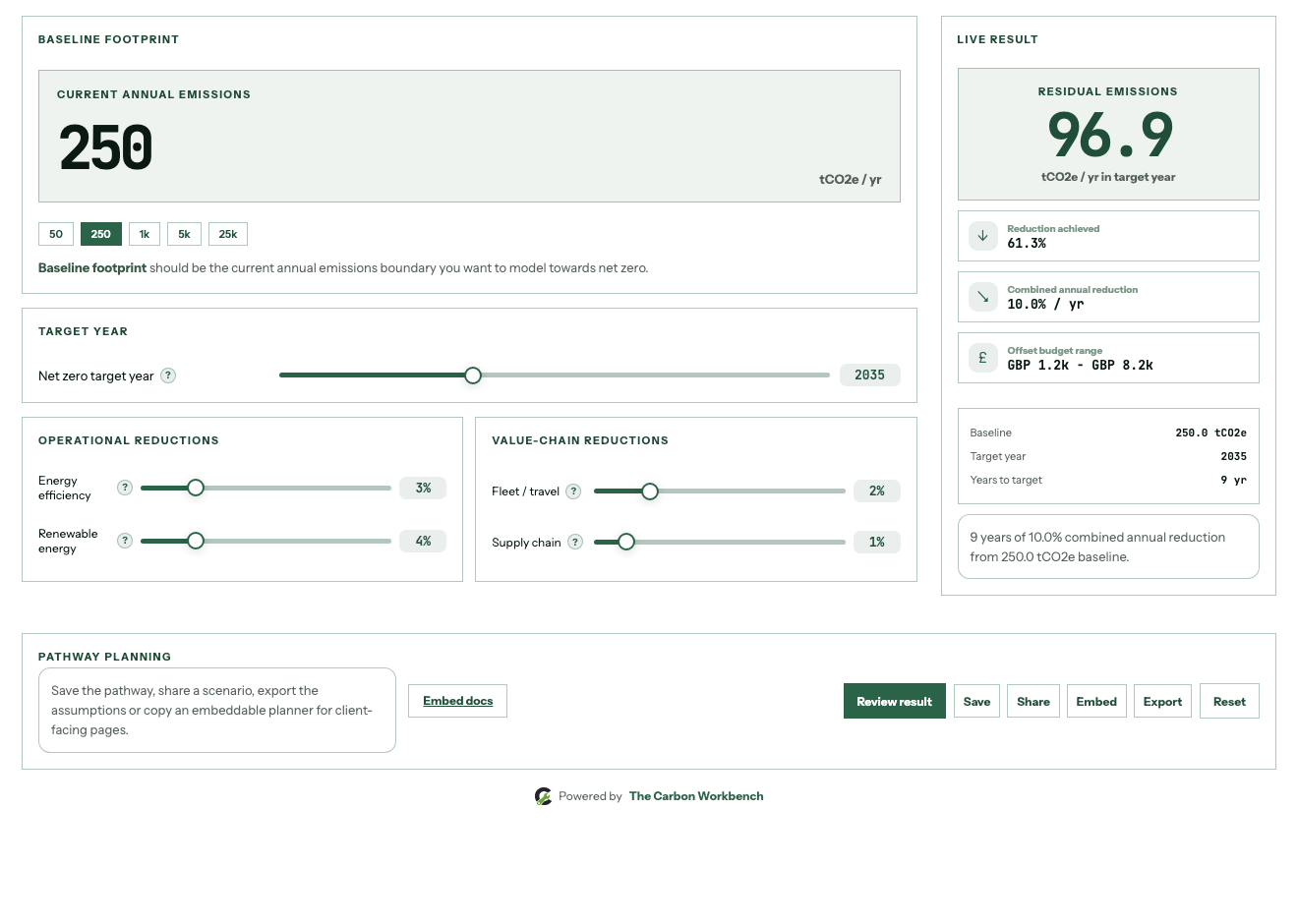
This planner is for businesses, consultants and internal sustainability teams that already have a baseline emissions picture and need to turn it into a usable reduction pathway. It is helpful once the question moves from “what do we emit?” to “how do we phase reductions and understand the residual?”
A net zero plan should expose the residual, not hide it. The point is to make the gap between planned reductions and final neutrality visible enough to manage.
Once a business has a baseline footprint, the planner helps translate ambition into a phased emissions path rather than a single target date.
If residual emissions are still large near the target year, that may not invalidate the plan, but it does change how offsets, removals or supplier interventions should be discussed.
The planner becomes more useful when linked back to footprint work and forward into pricing or offset strategy.
Open the Net Zero Planner in The Carbon Workbench to move from baseline emissions into staged reductions and residual view.
Open calculator →Yes. A planner is only as useful as the baseline it starts from.
No. It is a planning tool designed to help structure thinking and model a pathway.
No. It works best as a practical first-pass planning layer, not as a substitute for full operational transition planning.
